Physical Address
304 North Cardinal St.
Dorchester Center, MA 02124
Physical Address
304 North Cardinal St.
Dorchester Center, MA 02124

Apple is shaking up its mobile OS naming and feature set with iOS 26 (not iOS 19) – a hefty update previewed at WWDC 2025. Early leaks and Apple’s own press materials promise a “Liquid Glass” design language and deeper on‑device AI. Rumors suggest that Apple will announce iOS 26 in June 2025 (WWDC) and ship it publicly around September 2025 alongside new iPhones. In the meantime, developer betas will roll out immediately after the keynote, with a public beta likely by July.

According to analyst leaks and MacRumors, Apple plans to launch iOS 26 in September 2025, roughly in sync with its usual fall iPhone event. Developer previews arrive right after WWDC (June 2025), a public beta usually follows in July, and then the full version goes live next fall. (For example, MacWorld predicts “Date TBC: 15 September 2025” as the likely release date.) In short, expect iOS 26 to be downloadable on supported iPhones in September 2025 after several months of beta testing.
iOS 26 supports the same range of devices that supported iOS 18, minus a few older models. In practice, iOS 26 will be compatible with iPhone 11 and all newer models, up through the iPhone 16 series. Notably, the iPhone XR, iPhone XS, and iPhone XS Max (the 2018 models) will not run iOS 26. In other words, any iPhone 11 or later is in – but if you’re still on an XR/XS/XS Max, you’ll have to stay on iOS 18. (Apple will continue to update iOS 18 on those older devices for a while, but no iOS 26 for them.)
By comparison, iOS 18 runs on all iPhones that can run iOS 17, which includes 2018’s iPhone XR/XS/XS Max and later models. The full compatibility list for iOS 18, according to Apple’s support documents and MacRumors, is: iPhone XR, iPhone XS/XS Max, iPhone 11 (and 11 Pro/11 Pro Max), iPhone 12 series, iPhone 13 series, iPhone 14 series, iPhone 15 series, iPhone 16 series, plus the iPhone SE (2nd and 3rd generation). In summary, if your iPhone can update to iOS 18 (basically any model from XR/XS onward), it almost certainly supports iOS 26 too – except for the few 2018 models explicitly dropped.
Apple’s naming change isn’t a sign of a massive overhaul beyond normal – it’s mostly a branding tweak. Instead of calling the next version “iOS 19” in sequence, Apple jumped to iOS 26, aligning the version number with the year (2026) rather than a simple counter. MacWorld explains that Apple is “breaking with tradition” and moving to a “simpler naming convention that relates to the year rather than a sequential number”. The idea is to synchronize all its OS names (iPadOS, macOS, etc.) to calendar years. So there’s no hidden secret feature forcing a jump – it’s just “iOS 26 (2026)” instead of “iOS 19.”
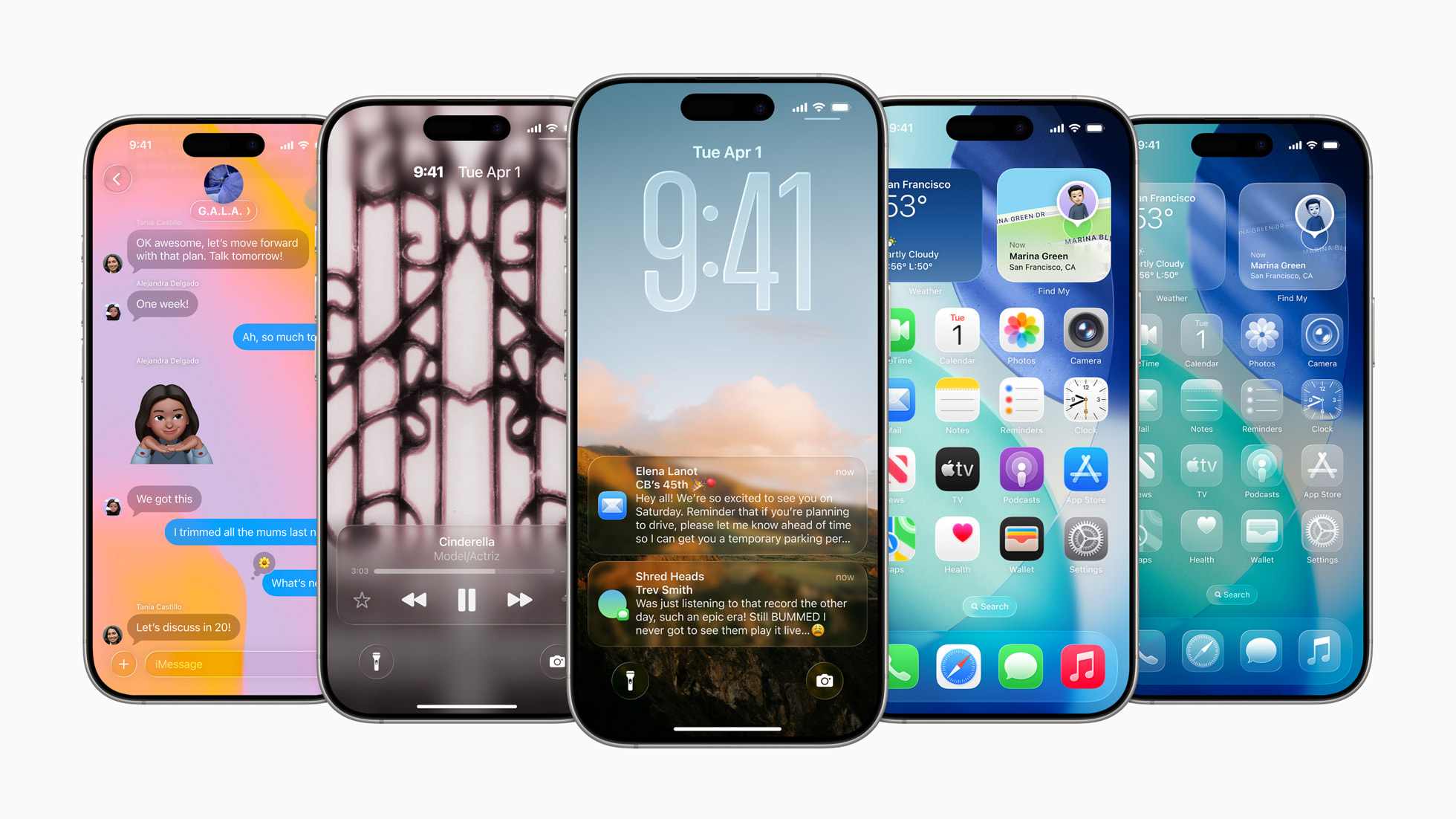
Apple’s press images show off the new “Liquid Glass” translucent design that iOS 26 brings to the Home and Lock screens. The visual theme of iOS 26 is expected to be its biggest change since iOS 7 (2013). Apple calls it Liquid Glass – a frosted, see-through look across the interface. Under this scheme, app icons, widgets, and even the dock use layered, glass-like translucency that “reflects and refracts” whatever is behind them. For example, the clock on your Lock Screen can be multi-colored and adaptive, and Safari’s tab bar becomes a floating rounded rectangle. There’s even a new fully “Clear Look” mode where backgrounds and icons can be extremely transparent.
These effects give iOS a fresh, fluid feel. Apple says the new design makes everything “more expressive and delightful” while still being familiar. In practical terms, you’ll notice more subtle animations, dynamic wallpaper scaling, and new widget styles. However, some early user feedback has been mixed. A number of iPhone owners on forums and social media have complained about readability – for example, one user warned that with a busy background the frosted overlay would be “an accessibility nightmare” and begged Apple to let users adjust the “frosting” level. Others said that lock-screen notifications “look like hell” because the thin text blends into the background. (Notably, Apple faced similar issues with its original flat iOS 7 design and later “dialed back the thinness” for accessibility.) We expect Apple will refine these effects before final release.
In summary, iOS 26 brings a complete UI redesign – new rounded buttons, 3D wallpaper effects, translucency galore – that makes the iPhone feel new. Whether every user loves it will depend on taste and how Apple tunes the contrast.
iOS 26 doubles down on Apple’s on-device AI (branded Apple Intelligence). It extends the basic AI tools introduced in iOS 18 (like writing assistance and summarization) with more generative and contextual features. For one, iOS 26 widens AI across apps. The iPhone’s on‑screen content becomes “live” to the AI: you can ask questions about what you see, and Apple will use integrated models (including ChatGPT and web search) to help. In Apple’s words, “Visual intelligence extends to a user’s iPhone screen”. This means, for example, while browsing the web or reading a document, you could highlight something and have ChatGPT explain it or pull related info. Developers also get a new Foundation Models framework to tap into this AI engine in their apps (though Apple says some Siri-like conversational features have been pushed to future updates).
Concretely, iOS 26 is said to include:
In short, Apple Intelligence in iOS 26 weaves AI into core workflows across the system. The focus is on practical helpers (translations, summaries, background tasks) rather than a single “Siri‑like” chatbot.
Beyond design and AI, iOS 26 brings several miscellaneous upgrades that will benefit users day to day:
Many of these will feel like incremental polish to everyday features. For example, people will appreciate the new call screening and spam filters reducing robocalls, and the translation tools for chats. Others will enjoy custom conversation wallpapers and poll-voting in Messages. Overall, iOS 26 seems aimed at making iPhones more personal and helpful on the whole.
Compared to iOS 18 (2024’s release), iOS 26 is a much bigger visual and AI leap. iOS 18 was largely iterative (focused on under‑the‑hood AI updates and small UI tweaks), whereas iOS 26 is a front‑to‑back redesign. It’s truly the biggest iOS revamp since iOS 7 replaced skeuomorphic icons with flat design. Apple’s move mirrors what Google did with Android 12’s Material You redesign, but Apple’s “Liquid Glass” emphasizes translucency and depth instead of Material You’s dynamic theming.
On the AI front, iOS 18 introduced Apple Intelligence (writing tools, basic screen queries, Siri improvements), but iOS 26 massively expands it. iOS 26 adds generative AI features (image creation, emoji mixing) and deeper context awareness (screen reading, email scanning) that iOS 18 didn’t have. By comparison, Android’s big AI push (e.g. Google Gemini, Bard) is more cloud-based and tied to Google’s apps. Apple’s AI is designed to run on-device when possible and put privacy first. Both ecosystems are racing to integrate ChatGPT‑style tech (Apple offers optional ChatGPT integration, Google has Gemini and Bard), but Apple’s solution is more tightly woven into iOS 26 and its “foundation models” framework.
In terms of features, Android (especially on Google Pixel and Samsung’s Galaxy line) has some comparable tricks (e.g. Pixel’s Live Translate, Recorder transcript, Samsung’s AI chat in camera, etc.). But the iPhone’s advantage lies in polished integration: you’ll get these AI helpers without installing separate apps, and Apple’s closed ecosystem means the experience is consistent. It’s still early to declare a “winner” – Apple plays catch‑up in raw AI power (Gemini vs Apple Intelligence models), but bets on privacy and smooth UX.
As with any big redesign, iPhone fans are divided. Many users on tech forums and social media are excited by the prospect of new visuals and tools – custom backgrounds, better call handling, and native game hubs sound appealing. However, some have voiced concerns, especially about the transparency effects. For example, one user on Reddit begged Apple to allow adjusting the “frosting” level, warning that a busy wallpaper could make text illegible. Others noted that lock-screen notifications (in promotional screenshots) looked hard to read because of the glassy backgrounds. This echoes complaints from the iOS 7 era, and many expect Apple will refine the contrast before the final release.
On the AI side, impressions are mixed. Some users say they’re thrilled to see Siri finally getting real smarts and generative tools; others remain skeptical until they try it themselves. (A few early adopters quipped that writing-assistant features in iOS 18 already help their daily tasks, but they’re waiting to judge if iOS 26’s “chat with your screen” really delivers.) Overall, the user impact will depend on your priorities: iOS 26 will delight power users who love tinkering with new features, but it may baffle or annoy those who simply want a simple phone interface. Apple’s gamble is that the majority will appreciate the revamped look and intelligence enough to adopt it.
With iOS 26, Apple is betting that cutting‑edge design and on-device AI will keep the iPhone at the forefront. So far, Apple remains one of the world’s top smartphone vendors. Canalys reports that in Q1 2025 Apple shipped 55 million iPhones (19% global share), second only to Samsung. In the U.S., iPhone’s market share is even higher (around 60%). These numbers show strong demand, especially since Apple generally charges premium prices.
Going forward, Apple’s strategy seems to be: lock in users with features. By weaving AI into everyday tasks and refreshing the look, iOS 26 deepens Apple’s ecosystem. Analysts note that Apple’s privacy-focused AI approach and new capabilities (as Craig Federighi emphasizes, “experiences are more expressive and personal, and users can get things done easier than ever”) could encourage upgrades and keep users loyal. Meanwhile, Android rivals (Google, Samsung, etc.) are also adding AI-driven features, so competition is heating up on both fronts.
In conclusion, the iPhone is likely to remain a leading player as long as Apple executes well. iOS 26’s bold redesign and AI promises keep it competitive in the “new world” of smart, context‑aware devices. Of course, rivals will continue innovating too. But given Apple’s strong market presence and dedicated fan base, it’s a safe bet that an updated iPhone will hold its own in the coming years – provided the company fine‑tunes this Liquid Glass vision and delivers useful AI, not just flashy concepts.
In short, Apple Intelligence in iOS 26 weaves AI into core workflows across the system. The focus is on practical helpers (translations, summaries, background tasks) rather than a single “Siri‑like” chatbot.
Learn more about Technology and startups
All stories by Khalid Sultan, Founder of the Xfynix Media
